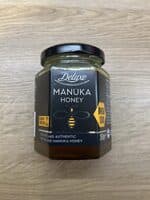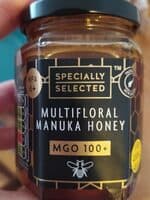

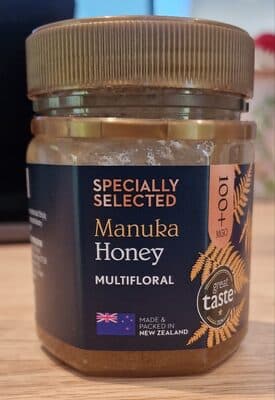
Specialy Seleceted
Manuka Honey


Product Insights
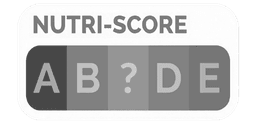
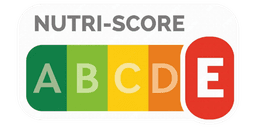
Manuka Honey, a multifloral honey marketed as a specialty sweet spread, belongs to the Sugary snacks dietary group. It delivers very high sugar (71 g per 100 g) and carbohydrate (83.1 g) levels while providing almost no fat, saturated fat, protein or salt, resulting in a Nutri‑Score of E. The product is unsuitable for infants under 12 months, is not vegan, and its high sugar content may be problematic for diabetics or those limiting added sugars.
Nutrient Levels
Traffic light indicators
Nutritional Values
Values per 100 g/ml
Comparative Analysis
Compared with the average sweet spread, this Manuka honey contains substantially more sugar (71 g vs 53 g per 100 g) and carbohydrates (83 g vs 70 g), while its fat, saturated fat, salt and protein levels are dramatically lower than the category averages.
Ingredients
MULTIFLORAL MANUKA HONEY WARNING: Honey should not be given to infants under 12 months of age NUTRITION This jar contains 15 tablespoon servings Typical values per 100g: Energy 1426kJ/336kcal, Fat 0.3g, of which saturates 0.1g, Carbohydrate 83.1g, of which sugars 71.0g, Fibre Og, Protein 0.2 Sal 0.01g. Typical values per tablespoon (15g) (%*RI): Energy 214k/50kcal Fat 0g (<1%), of which saturates Og (<1%), Carbohydrate 125, of whi sugars 10.6g (12%), Fibre Og, Protein 0g, Salt 0g (<1%). "RI=Reference Intake. Reference Intake of an Average Adult (8400kJ/2000kcal). BEST BEFORE: See label. STORAGE: Store in a cool, dry place. Clear honey may begin to crystallise if stored at low temperatures This can be reversed by gently warming. 2259
Unlock What Your Food Doesn't Tell You
Scan this and millions of other food products to discover hidden positive & negative points, scores percentage, additives, allergens, and deeper product insights with the free NutrScan app.
Frequently Asked Questions
Everything you need to know about Manuka Honey.