
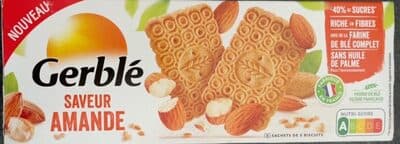
Gerblé • 210g
Amande


Product Insights
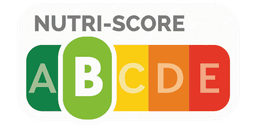
Amande is a sweet biscuit that belongs to the Sugary snacks group. It carries a Nutri‑Score of B and is classified in NOVA group 4, indicating an ultra‑processed product; per 100 g it provides 8 g of fiber and 10 g of protein but also 17 g of sugars and 1.6 g of saturated fat. While its energy content is moderate at 471 kcal per 100 g and salt is low, the high sugar level and processed nature limit its suitability for health‑focused diets.
Nutrient Levels
Traffic light indicators
Nutritional Values
Values per 100 g
Comparative Analysis
Compared with the average biscuit, Amande has considerably less sugar (17 g vs 28.9 g) and far lower saturated fat (1.6 g vs 7.8 g), yet it contains more total fat (19 g vs 17.7 g) and higher calories (471 kcal vs 418 kcal).
Ingredients
Farine de blé 30,6%, farine complète de blé 30,6%, sucre non raffiné, huile de colza, germe de blé 5,4% (origine UE), amandes torréfiées 5,4% (origine UE et non-UE), fibres de blé, arôme naturel, jus concentré de citron, émulsifiant lécithines, magnésium, poudre à lever carbonates de sodium, vitamines B1 et B9. Fabriqué dans un atelier qui utilise des fruits à coque, du lait, du lupin, de la moutarde, de l'oeuf, du sésame et du soja.
Unlock What Your Food Doesn't Tell You
Scan this and millions of other food products to discover hidden positive & negative points, scores percentage, additives, allergens, and deeper product insights with the free NutrScan app.
Frequently Asked Questions
Everything you need to know about Amande.